
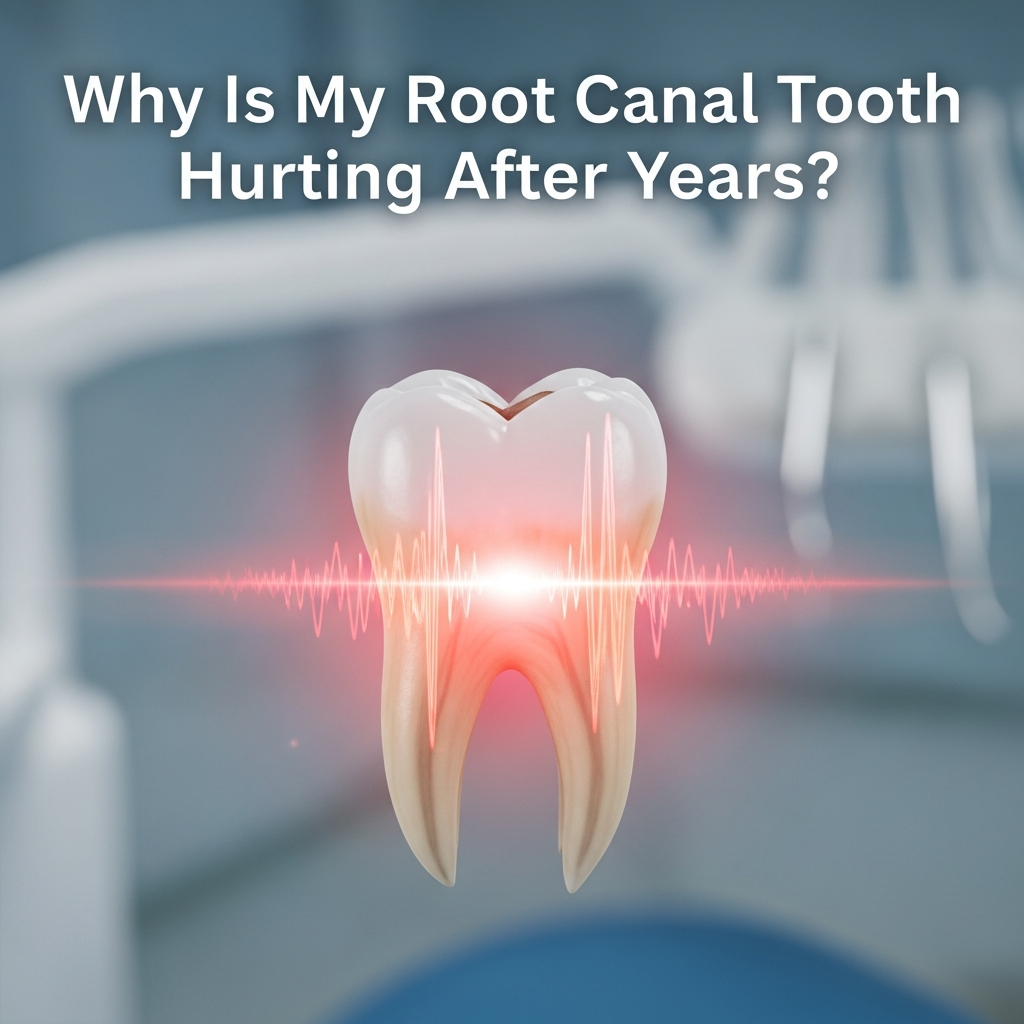
Understanding Delayed Root Canal Pain
Root canals save millions of teeth across the United States each year. The procedure removes infected pulp tissue, disinfects the inner canals, and seals the tooth to prevent reinfection. Once completed, patients expect long-term relief and restored comfort.
So when your root canal tooth starts hurting after years, it can be confusing — and worrying. Shouldn’t the pain be gone for good?
The truth is that while root canal treatments are highly effective, no dental procedure lasts forever. A previously treated tooth can develop new problems due to aging restorations, microscopic cracks, or bacterial leakage. The good news? With prompt dental evaluation, your dentist can often save the tooth and stop the pain.
This article explains why your old root canal tooth hurts after years, what symptoms to watch for, and how U.S. dental professionals can help restore lasting comfort.
Reasons for Pain Years After a Root Canal
Even a well-done root canal can encounter new challenges over time. Here are the most common causes of pain years after a root canal.
1. Hidden or Recurrent Infection
The most frequent reason for delayed root canal pain is bacterial reinfection. During the initial treatment, the dentist cleans and seals the canals, but some teeth have complex or curved canal systems. If bacteria remain hidden inside tiny branches, they may survive and reactivate years later.
A leaking crown, cracked filling, or decay near the tooth can also let new bacteria in. Once the seal is compromised, infection can spread to the bone and tissues around the root tip, leading to tenderness or swelling.
2. Cracked or Damaged Tooth Structure
Over time, a root-canal-treated tooth may become brittle. Clenching, grinding, or biting hard foods can create micro-fractures. Even a hairline crack can expose the inner structures to bacteria, causing root canal pain years later when chewing or applying pressure.
3. Failing Filling or Crown
Crowns and fillings protect the tooth after treatment, but they can loosen, wear down, or break. When a crown loses its tight seal, saliva and bacteria sneak in through the margins and cause new decay.
If your tooth with a root canal and crown hurts with pressure, the crown may need replacement.
4. Gum or Bone Problems (Periodontal Disease)
Pain doesn’t always mean the root canal failed. Sometimes, gum infection or bone loss near the treated tooth causes discomfort. This can happen if plaque builds up under the gumline or around old dental work.
5. Referred Pain from Nearby Structures
Occasionally, discomfort near a root-canal-treated tooth stems from other causes — such as sinus pressure, a neighboring tooth infection, or temporomandibular joint (TMJ) strain. Proper diagnosis is key to finding the real source of pain.
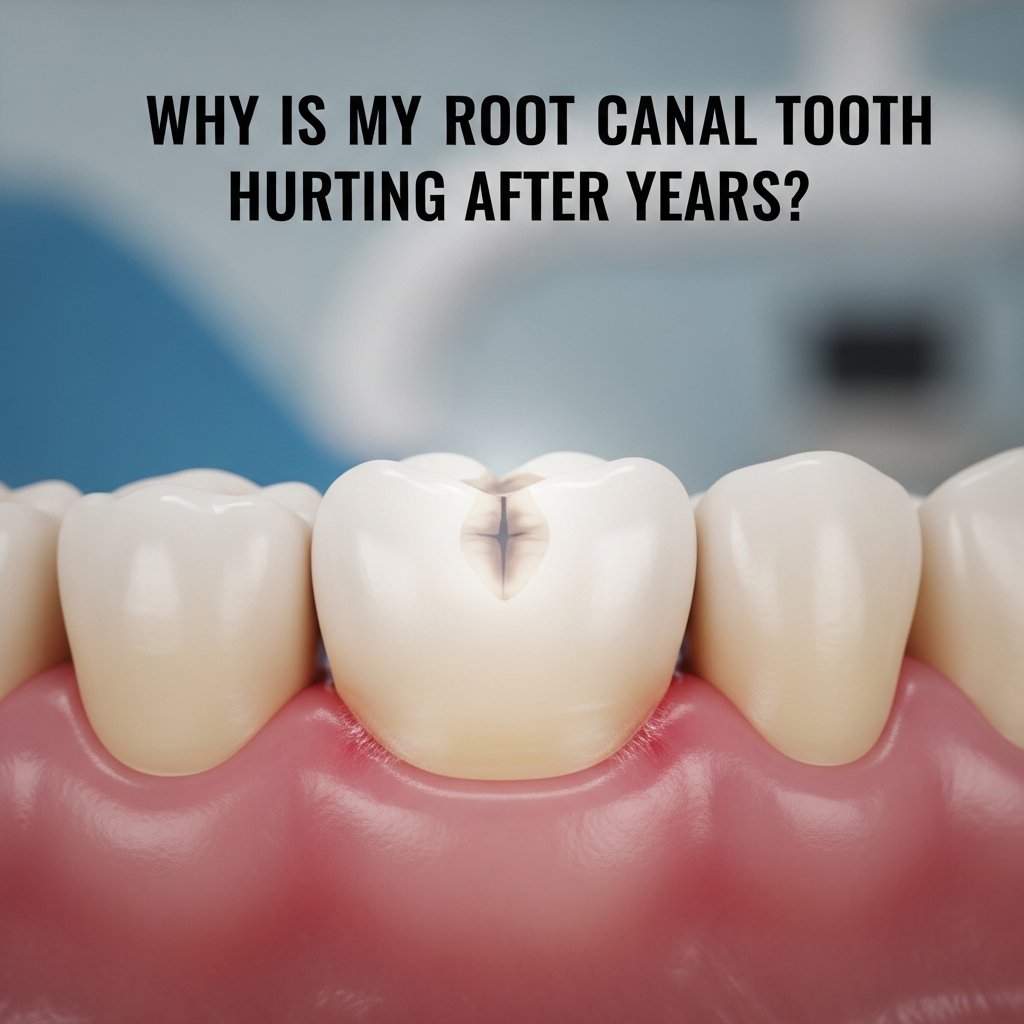
Symptoms Indicating a Problem in Your Root Canal-Treated Tooth
How can you tell if your old root canal is acting up again? Look for these warning signs.
1. Persistent or Recurrent Pain
If you experience sharp, dull, or throbbing pain that wasn’t there before, it could be a sign of infection or inflammation in the tissues surrounding the root tip.
2. Pain When Biting or Chewing
A tooth that hurts under pressure or when you eat could have a high crown, fracture, or bone infection. If the pain is localized and gets worse when you tap or bite down, schedule a dental exam right away.
3. Gum Swelling or a Small Pimple (Fistula)
A pimple-like bump on the gum near the tooth indicates a small drainage tract for infection. It may appear and disappear over time but signals a chronic problem that needs treatment.
4. Tooth Discoloration
A darkened tooth or grayish hue may mean the internal structure has changed or infection has returned.
5. Tender Jaw or Facial Pressure
If your jaw feels tender or swollen near the old root canal tooth, infection may have spread to surrounding tissues or bone.
Bottom line: Even if the nerve was removed years ago, the tissues around your tooth root can still feel inflammation. Persistent symptoms mean it’s time to see your dentist or an endodontist.
Treatment Options for an Infected Root Canal Tooth
When your old root canal tooth hurts after years, modern dentistry offers several treatment options. Your dentist will choose based on the cause and severity of the problem.
1. Root Canal Retreatment
In many cases, retreatment can save your natural tooth. The dentist removes the old filling material, disinfects the canals again, and reseals them with fresh filling and a new crown.
Retreatment is ideal when:
- Bacteria have re-entered through a leaky crown or filling.
- A hidden canal was missed during the first procedure.
- The original seal failed over time.
Most U.S. endodontists achieve 80–90% success rates for retreatment when the issue is caught early.
2. Apicoectomy (Endodontic Surgery)
If retreatment isn’t possible — for example, if the canals are blocked or sealed — an apicoectomy can remove the infected root tip. The dentist or endodontist accesses the root through the gum, removes the infection, and seals the end of the canal.
This minor surgery prevents extraction and preserves the natural tooth structure.
3. Extraction and Tooth Replacement
If the damage is too extensive or the tooth is fractured below the gumline, extraction may be the only solution. After healing, you can replace the tooth with:
- Dental implant (most durable and natural-looking)
- Fixed bridge
- Removable partial denture
4. Antibiotics and Supportive Care
Antibiotics can temporarily control infection, but they don’t remove the source. They’re typically prescribed before or after definitive treatment to prevent spread.
5. Restorative Follow-Up
After infection control, replacing or repairing old crowns is crucial. A well-sealed crown keeps bacteria out and prevents future reinfection.
What Should You Do Next?
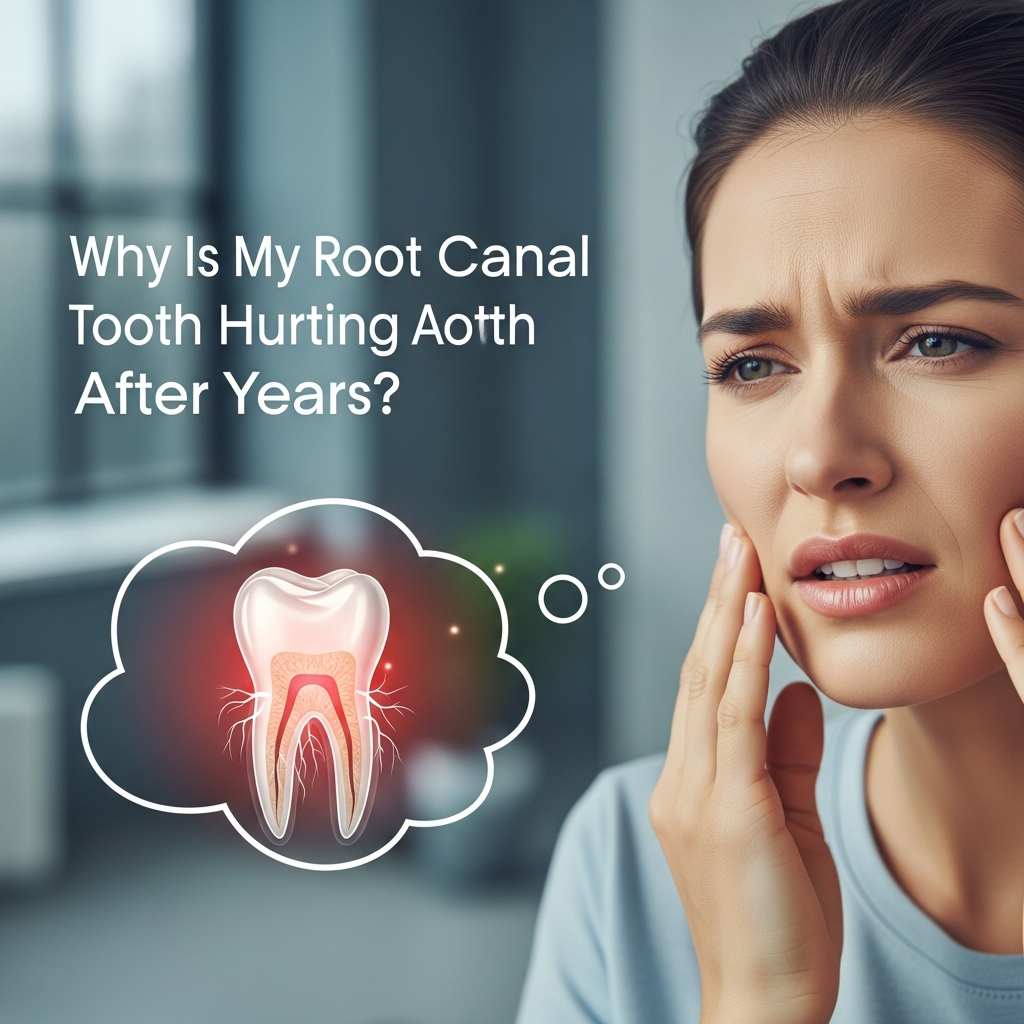
If you’re wondering why your root canal tooth hurts after years, follow these steps to protect your dental health.
1. Don’t Ignore the Pain
Persistent pressure or throbbing pain won’t go away on its own. Delaying care allows infection to worsen, potentially affecting bone and adjacent teeth.
2. Schedule a Dental Evaluation
Call your dentist or endodontist for an exam. They’ll take digital X-rays or a 3D CBCT scan to assess for hidden infections, fractures, or bone loss.
Early diagnosis means simpler, more affordable treatment — often saving your natural tooth.
3. Choose an Experienced Professional
For complex or recurring root canal problems, seeing an endodontic specialist is ideal. These experts use advanced microscopes and imaging to locate hidden canals or cracks that general dentists might miss.
4. Maintain Preventive Care
Once your tooth is retreated or restored:
- Brush twice daily with fluoride toothpaste.
- Floss gently to remove plaque near the crown margins.
- Schedule dental checkups every six months.
- Avoid grinding by using a night guard if recommended.
5. Stay Positive
Pain years after a root canal doesn’t always mean failure — it simply means your tooth needs renewed attention. With modern endodontic techniques, most patients achieve full comfort and function again.
Why Old Root Canal Infection Symptoms Return and What To Do Next
Even the most carefully treated tooth can harbor dormant bacteria. Here’s why old root canal infection symptoms sometimes reappear years later.
How Bacteria Survive Inside a Treated Tooth
Inside every tooth are microscopic channels called dentinal tubules. Despite thorough cleaning, bacteria can sometimes survive in these tiny spaces. Over time, if the seal around the tooth weakens, those bacteria become active again and spread to the bone or surrounding tissues.
Common Signs of a Returning Infection
- Persistent dull ache near the treated tooth
- Gum swelling or drainage
- Sensitivity when chewing
- Foul taste or odor
- Darkening of the tooth
Next Steps
If these symptoms sound familiar:
- Schedule an appointment with your dentist or endodontist.
- Avoid chewing hard foods on that side.
- Ask about retreatment or surgical cleaning options.
- Don’t delay — untreated infections can spread to your jaw or sinus area.
Key takeaway: Timely retreatment restores health and prevents more serious complications.
Why You May Need Retreatment After a Root Canal
Even if your initial root canal worked perfectly, natural wear and tear can compromise it over time. Here’s why you might need retreatment.
When Retreatment Is Recommended
- Pain or swelling develops near the treated tooth.
- New decay forms under the crown.
- X-rays reveal dark spots indicating bone infection.
- The crown or filling becomes loose or damaged.
What Happens During Retreatment
- The dentist removes the old crown and filling material.
- The inner canals are cleaned and disinfected again.
- The tooth is resealed with biocompatible material.
- A new crown is placed for protection.
Success Rates and Cost
In the U.S., retreatment typically costs less than extraction and implant replacement. Success rates remain high — often exceeding 85–90% when performed by experienced endodontists using digital imaging and microscopes.
Symptoms of Lingering Endodontic Problems
Sometimes, discomfort lingers even without visible infection. Here’s what to watch for:
- Mild but constant ache in or around the treated tooth
- Sensitivity when tapping or chewing
- Slight gum swelling or tenderness
- Tooth discoloration or change in bite
- Pus drainage or persistent bad taste
If these signs persist for more than a few days, schedule an exam. Lingering inflammation can lead to bone loss or chronic infection if ignored.
How a Dental Professional Can Help
Dentists and endodontists use advanced diagnostics to determine exactly why your root canal tooth hurts years later.
Diagnosis
- Visual exam for cracks, crown damage, or decay
- Percussion tests to check for pressure sensitivity
- Digital X-rays to spot bone infection
- CBCT 3D imaging for hidden canals or fractures
Treatment
Depending on findings, your provider may recommend:
- Retreatment to clean canals
- Crown replacement
- Surgical root repair (apicoectomy)
- Extraction with dental implant
Modern Endodontic Technology in the U.S.
American dental clinics use microscopes, ultrasonic instruments, and laser disinfection for precise, minimally invasive treatments — ensuring longer-lasting results and less post-operative discomfort.
What’s Behind Your Smile?
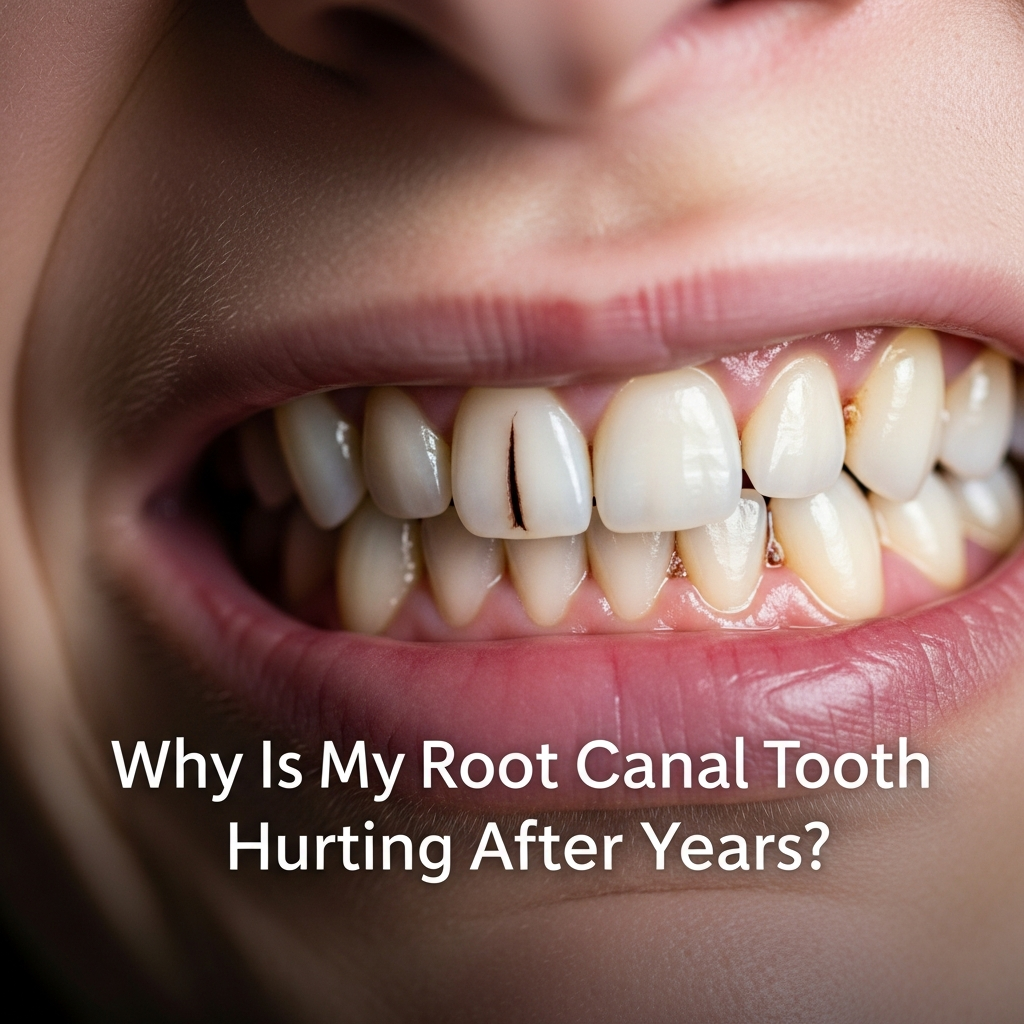
Behind every confident smile is a foundation of healthy teeth. Root canal therapy preserves that foundation — but ongoing care keeps it strong.
If your root canal tooth starts hurting after years, don’t see it as a failure — see it as a sign your tooth needs a check-up. Dentistry has advanced far beyond what it was decades ago. Retreatment or minor surgery can often save your natural tooth for many more years.
Your smile tells your story — make sure it stays bright and pain-free with regular dental care.
Related Products
To maintain long-term root canal health, dentists often recommend:
- Soft-bristled toothbrushes to protect enamel and gums
- Fluoride toothpaste for cavity prevention
- Antibacterial mouthwash to control bacteria
- Night guards for patients who grind or clench teeth
Ask your dentist which products best suit your oral health needs.
Related Articles
- Tooth with Root Canal Hurts with Pressure — What It Means
- How Long Should a Root Canal Last?
- Root Canal Retreatment: Is It Worth It?
- Tips for Maintaining Dental Crowns and Restorations
(Use internal links to connect to these articles for stronger SEO.)
Helping Dental Professionals
For dental professionals, educating patients about long-term root canal maintenance is key. Encourage regular follow-ups and X-rays to detect reinfection early.
Continuing education in modern endodontic imaging and laser cleaning techniques helps ensure higher success rates and improved patient outcomes across the U.S.
By guiding patients to understand symptoms early, dental teams can preserve more natural teeth — the ultimate goal behind every healthy smile.
Conclusion
If you’re asking, “Why is my root canal tooth hurting after years?”, know that you’re not alone — and it’s fixable.
Pain after years often signals reinfection, a cracked crown, or gum issues, not total treatment failure. Modern endodontic care in the U.S. offers effective solutions like retreatment or apicoectomy, allowing you to keep your natural tooth and eliminate pain.
The key is timely professional evaluation. Don’t ignore persistent discomfort — contact your dentist or endodontist today and restore your confidence, comfort, and long-lasting oral health.
Root Canal Tooth Hurts with Pressure Months Later
Pain months later may indicate lingering inflammation or a minor reinfection that needs a dental check.
Root Canal Tooth Hurts with Pressure
Pressure pain often signals a high bite, crown issue, or returning infection in the treated tooth.
Old Root Canal Tooth Hurts with Pressure
An old root canal tooth can hurt from cracks, worn restorations, or new bacterial infection.
Root Canal Tooth Hurts with Pressure Years Later
Years-later discomfort usually means reinfection, bone inflammation, or a compromised seal around the root.
Tooth with Root Canal and Crown Hurts with Pressure
If a crowned root-canal tooth hurts under pressure, the crown may be loose or allowing bacteria in.
Pingback: Why Is My Root Canal Tooth Hurting After Years?
Pingback: How Long Does It Take Wisdom Tooth To Heal
Pingback: Why Does My Tooth Hurt After a Filling - Shine Your Teeth
Pingback: What Can I Eat After Tooth Extraction
Pingback: How Long Does a Tooth Extraction Take
Pingback: why does my tooth filling hurt after months
Pingback: How Long Does A Tooth Extraction Take to Heal
Pingback: How Long Is The Recovery From Wisdom Tooth Removal
Pingback: How Much Are Cosmetic Canine Tooth Crowns
Pingback: Why Does My Tooth Hurt After A Filling