
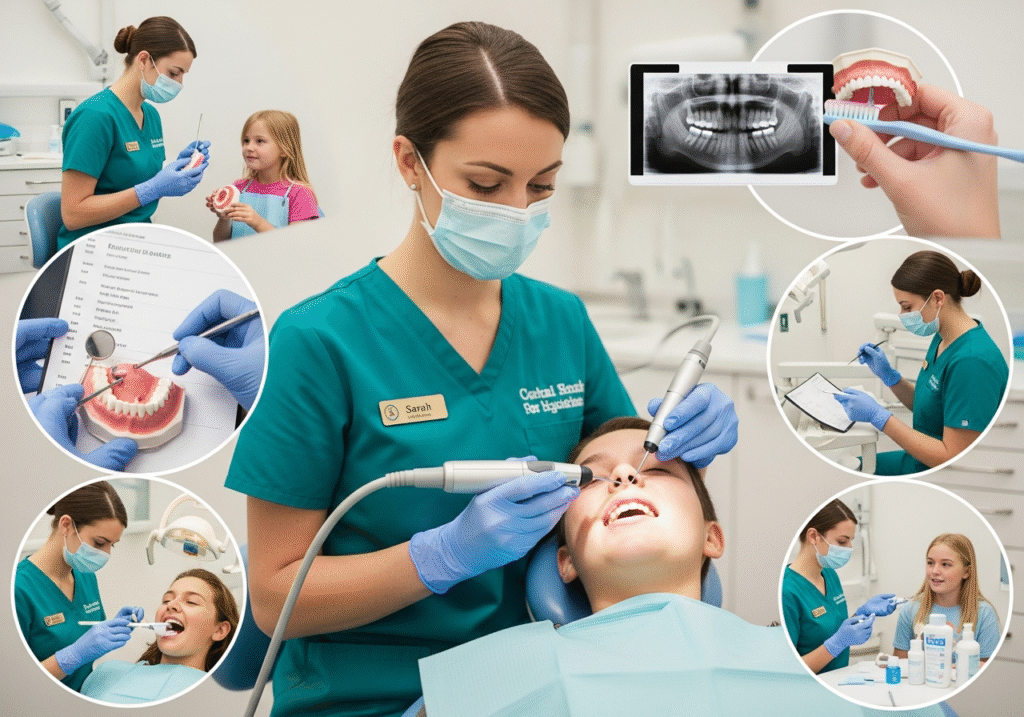
When you walk into a dental office in the United States, the first person you usually spend significant time with is the Registered Dental Hygienist (RDH). While many patients think of them as the person who “cleans” their teeth before the dentist arrives, the reality is far more complex.
A dental hygienist is a licensed preventive health specialist. In the U.S., they serve as the frontline of defense against oral diseases, systemic health issues, and even life-threatening conditions.
In this post, we’ll break down exactly what happens during those 60 minutes in the hygienist’s chair and why their role is vital to your overall longevity.
1. The Clinical Experts: Scaling, Root Planing, and Prevention
The most recognizable part of a hygienist’s job is the professional dental prophylaxis. Even with perfect home care, soft plaque eventually mineralizes into calculus (tartar).
- Manual and Ultrasonic Scaling: Hygienists use specialized hand instruments and ultrasonic devices that vibrate at high frequencies to shatter tartar. This is essential because tartar cannot be removed by a toothbrush and is the leading cause of gum disease.
- Root Planing: For patients with periodontal (gum) disease, the hygienist performs “deep cleanings.” They smooth the root surfaces under the gumline, removing bacteria and allowing the gum tissue to heal and reattach to the tooth.
- Preventive Applications: They apply high-concentration fluoride and sealants—thin protective coatings placed over the pits of molars—to prevent up to 80% of potential cavities in children and adults.
2. Diagnostic Screenings: The “First Responder” of Oral Health
Hygienists are trained to look for things you might miss. In many cases, they are the first to spot serious health problems.
- Periodontal Charting: By measuring the “pockets” in your gums with a specialized probe, the hygienist determines the health of your bone and tissue. Measurements over 3mm are a clinical warning sign that you may be losing the foundation that holds your teeth in place.
- Oral Cancer Screenings: Every routine visit includes a screening of the head, neck, and soft tissues of the mouth. Early detection by a hygienist significantly increases the survival rate for oral cancers.
- X-Ray Interpretation: Hygienists are licensed to take and process digital radiographs. They identify hidden decay, abscesses, and bone loss that the dentist will later review for final diagnosis.
3. The Oral-Systemic Connection
Modern medicine has proven that oral health is total health. A dental hygienist manages the inflammation in your mouth to protect the rest of your body. Research shows a direct link between chronic gum disease and:
- Heart Disease: Oral bacteria entering the bloodstream can contribute to arterial plaque.
- Diabetes: Gum disease makes it harder to stabilize blood sugar, while high blood sugar makes gum disease worse.
- Pregnancy Issues: Active oral infections are linked to preterm labor and low birth weight.
4. The “Health Coach”: Personalized Education
Perhaps the most important thing a hygienist does is empower the patient. They don’t just tell you to “brush more”; they provide a customized strategy based on your unique oral anatomy.
- Home Care Plans: They recommend specific electric brushes, water flossers, or interdental cleaners that fit your specific needs.
- Nutritional Counseling: They explain how “acid attacks” from frequent snacking or soda consumption can erode enamel over time.
- Tobacco & Vaping Cessation: Because they see the damage firsthand, hygienists are primary counselors for patients looking to quit smoking or vaping.
5. Education and Licensure (USA)
Becoming an RDH in the United States is a rigorous process. Most hygienists hold an Associate or Bachelor’s degree and must pass three major hurdles:
- The National Board Dental Hygiene Examination.
- A Regional Clinical Board exam (performing procedures on a live patient).
- A State Jurisprudence exam for specific local laws.
In many states, they are also certified to administer local anesthesia (numbing shots) and nitrous oxide (laughing gas).
Conclusion
While the dentist is the “architect” who plans the repairs for your mouth, the hygienist is the “preventive engineer” who ensures the foundation never crumbles in the first place. By visiting your hygienist every six months, you aren’t just getting a brighter smile—you are investing in your heart health, your blood sugar, and your future.
Pingback: Does Dental Implant Covered By Insurance