
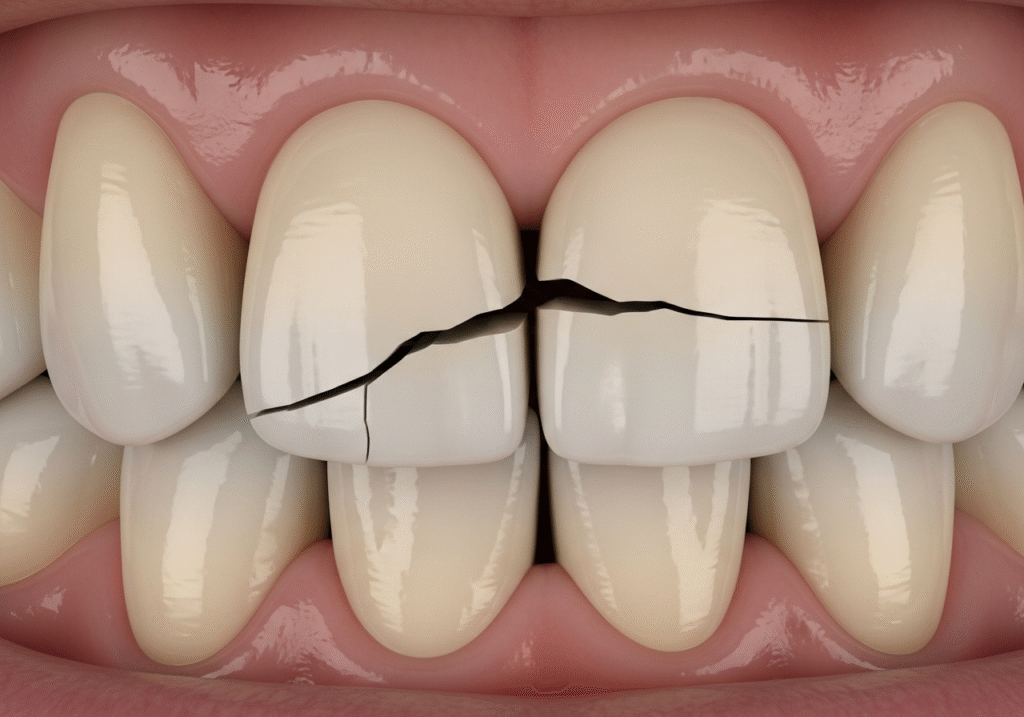
Dental restorations—like crowns, fillings, and veneers—are designed to be tough. However, they aren’t indestructible. Many patients often find themselves asking, “How would a restoration get cracked?” after feeling a sharp edge or sudden sensitivity.
A cracked restoration isn’t just a cosmetic issue; it can invite bacteria into the core of your tooth, leading to painful infections. Here is everything you need to know about protecting your dental work.
Why Do Restorations Crack? (Common Causes)
Even the most expensive zirconia crown can fail if subjected to the wrong forces:
- Micro-Trauma: Frequently chewing ice, hard candies, or popcorn kernels.
- Bruxism (Teeth Grinding): Constant nightly pressure weakens porcelain and composite.
- Material Fatigue: Over 10–15 years, materials naturally wear down and become brittle.
- Secondary Decay: If bacteria get under the restoration, they weaken the tooth structure, causing the crown or filling to lose its “grip” and crack.
Material Breakdown: Which One Lasts Longest?
| Material Type | Strengths | Weaknesses | Average Lifespan |
| Porcelain | Most Natural Look | Prone to chipping | 10–15 years |
| Composite | Seamless blend | Less durable under pressure | 5–7 years |
| Metal (Gold) | Extremely strong | Not aesthetic | 15–25 years |
| Zirconia | Strong & Aesthetic | Can be expensive | 15–25+ years |
The Role of the Oral Microbiome in Restoration Success
Most people think a restoration fails because of the “material.” But often, the failure starts at the gum line. If your oral microbiome is imbalanced, “bad” bacteria produce acids that dissolve the dental cement holding your restoration in place.
Pro-Tip: To make your crowns and fillings last longer, you must defend the “seal” between the restoration and the tooth. ProvaDent is an advanced oral probiotic that helps crowd out harmful bacteria. By maintaining healthy gums and a neutral pH in your mouth, ProvaDent prevents the micro-decay that causes restorations to loosen and eventually crack.
Warning Signs You Shouldn’t Ignore
If you notice any of these, your restoration might be compromised:
- Sharpness: Feeling a jagged edge with your tongue.
- Temperature Sensitivity: Sudden pain when drinking cold water.
- “Clicking” Sound: A faint sound when you bite down.
- Food Trapping: If food suddenly starts getting stuck in a place where it didn’t before.
Preventive Maintenance Checklist
- Night Guards: If you wake up with a sore jaw, you are likely grinding your teeth. Get a guard to protect your investment.
- Soft-Bristled Brushes: Harsh scrubbing can wear down the margins of veneers and crowns.
- Regular Polishing: Visit your dentist every 6 months to ensure the margins of your restorations are smooth and bacteria-free.
Conclusion
Understanding how would a restoration get cracked helps you avoid the habits that lead to expensive repairs. By choosing the right materials, practicing smart oral habits, and using probiotics like [ProvaDent], you can ensure your smile stays intact for decades.
Pingback: What Is A Dental
Pingback: Dental Bone Graft
Pingback: Why Is My Root Canal Tooth Hurting After Years?