
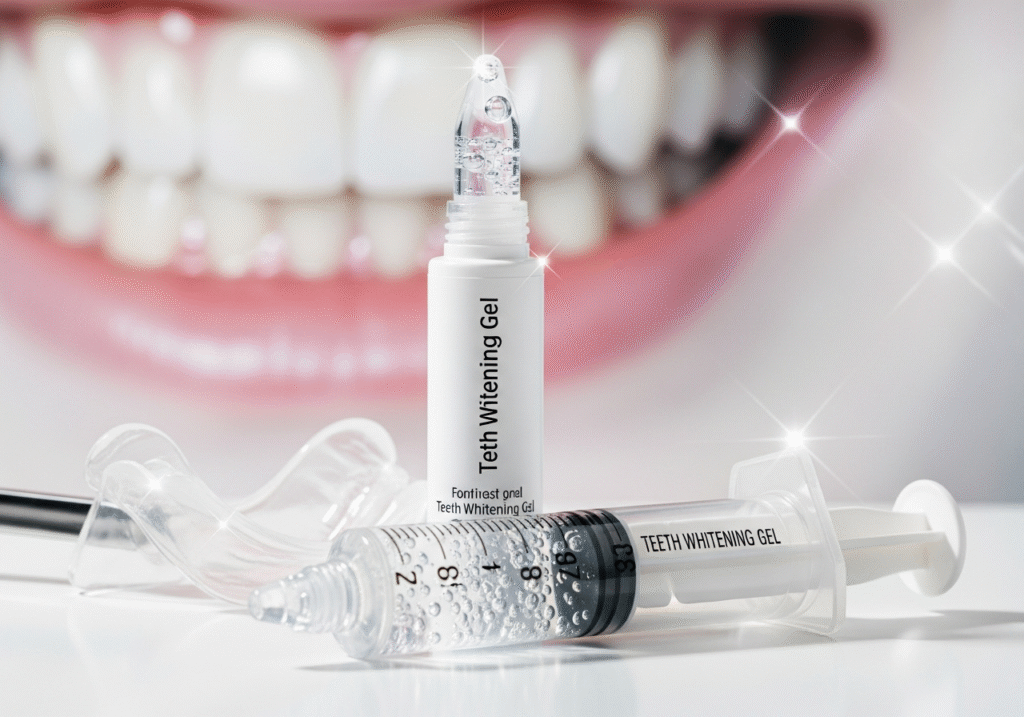
A bright smile can make a huge difference in confidence and appearance. While regular toothpaste only cleans the surface, teeth whitening gel is designed to penetrate deep into the enamel to break down stubborn stains from coffee, wine, and aging.
In 2026, the key to successful whitening is balancing “Speed” with “Safety.” Here is how to choose and use the best whitening gel for your needs.
Hydrogen Peroxide vs. Carbamide Peroxide: What’s the Difference?
Most professional whitening products use one of these two active ingredients. Understanding them will save you from unnecessary tooth sensitivity.
| Ingredient | How it Works | Best For… |
| Hydrogen Peroxide (HP) | Breaks down very fast (30-60 mins). | Instant results, in-office treatments. |
| Carbamide Peroxide (CP) | Breaks down slowly over several hours. | At-home trays, overnight use, sensitive teeth. |
Conversion Tip: 10% Hydrogen Peroxide is roughly as strong as 30% Carbamide Peroxide. Always check the percentage before applying!
Recommended Strength & Wear Time
Using a gel that is too strong for too long is the #1 cause of enamel damage. Follow these general 2026 guidelines:
- Low Strength (10% CP): Safe for 6–8 hours or overnight.
- Medium Strength (22% CP): Best for 1 hour daily.
- High Strength (35%+ CP): Only for 15–30 minutes.
3 Golden Rules for Safe At-Home Whitening
- Clean Surface First: Always brush and floss before applying the gel. Plaque acts as a barrier, and if you whiten over it, you’ll get “spotty” or uneven results.
- Less is More: Overfilling your whitening tray doesn’t make teeth whiter; it just causes the gel to leak and burn your gums (causing painful white patches).
- Consistency Over Intensity: Like exercise, daily moderate sessions are more effective and safer than one long, painful session.
Protecting Your Enamel During the Process
Whitening gels work by opening the “pores” (tubules) of your teeth. While this removes stains, it also leaves your teeth temporarily vulnerable to bacteria and new stains.
Editor’s Note: Frequent use of chemical gels can disrupt your mouth’s natural defense. Many dental experts now recommend using an oral probiotic alongside your whitening routine. ProvaDent helps repopulate your mouth with beneficial bacteria that protect your weakened enamel and prevent the rapid return of yellow plaque. It’s the “safety net” your teeth need during a bleaching cycle.
Common Side Effects & How to Manage Them
- Zinging Sensitivity: If your teeth feel “sharp” pain, stop for 24 hours. Use a desensitizing toothpaste containing potassium nitrate.
- Gum Irritation: This happens when gel touches the soft tissue. Use a Q-tip to wipe away excess gel from the gum line immediately after inserting your trays