
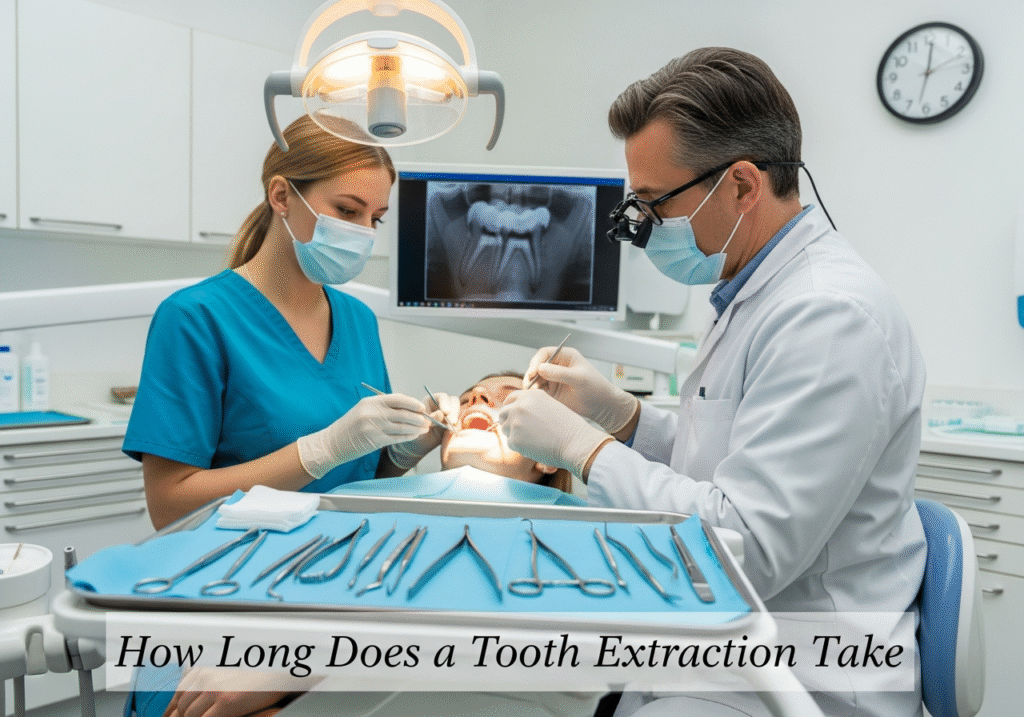
When facing dental procedures, many people wonder how long does a tooth extraction take and what to expect during the process. Understanding the timeline can ease anxiety and help patients plan their day around the appointment. A tooth extraction, whether simple or surgical, involves removing a tooth from the gum and jawbone, often due to tooth decay, infection, or overcrowding. Knowing how long does a tooth extraction take depends on several factors, including the type of tooth, anesthesia, and the dentist’s experience. In this article, we’ll explain how long does a tooth extraction take, the recovery process, and tips to ensure a smooth procedure.
Tooth extraction is a common dental procedure, yet it remains one of the most misunderstood. Many people experience anxiety when they learn that a tooth needs to be removed, often imagining long, painful, and complicated procedures. Understanding how long a tooth extraction takes can alleviate some of this anxiety and prepare patients for what to expect. While the duration of an extraction can vary widely depending on several factors, it is generally a straightforward process when performed by a skilled dental professional. This article will explore every aspect of tooth extraction, including preparation, procedure, recovery, and the factors that influence the time it takes. By the end, you will have a comprehensive understanding of what goes into a tooth extraction and how to plan for it.
What Is a Tooth Extraction
Tooth extraction refers to the removal of a tooth from its socket in the jawbone. It is one of the most common dental procedures and can range from a simple removal of a loose tooth to a more complex surgical procedure for impacted or damaged teeth. Extractions may be necessary due to severe decay, advanced periodontal disease, infection, trauma, overcrowding, or orthodontic reasons. Wisdom teeth, which are prone to impaction and misalignment, are among the most frequently extracted teeth.
Dental professionals classify tooth extractions into two main categories: simple and surgical. A simple extraction is typically performed on a tooth that is fully erupted and easily accessible. Surgical extraction, on the other hand, involves removing teeth that are broken, impacted, or not fully visible above the gum line. Surgical procedures may require cutting the gum tissue or even removing some bone to access the tooth properly. Understanding the type of extraction required is crucial for predicting how long the procedure will take, as surgical extractions are naturally more time-consuming than simple ones.
Factors That Affect the Duration of a Tooth Extraction

Several factors influence how long a tooth extraction will take. While some procedures may be completed in just a few minutes, others can take an hour or more, depending on the complexity. One major factor is the location and position of the tooth. Front teeth are typically easier to extract than molars because their roots are usually straighter and more accessible. Molars, particularly wisdom teeth, often have multiple roots that may be curved or intertwined with the jawbone, making extraction more complicated.
Another critical factor is the overall health and age of the patient. Patients with healthy gums and bone structure tend to have quicker and smoother extractions, whereas those with chronic conditions, infections, or weakened bone may require additional care and time. The patient’s cooperation and ability to remain still during the procedure also play a significant role.
The type of anesthesia used can affect the overall duration of the procedure as well. Local anesthesia is commonly used for simple extractions and numbs the area without affecting consciousness. Sedation or general anesthesia may be necessary for surgical extractions, particularly for patients with dental anxiety or complex cases. Sedation may add preparation and recovery time to the overall experience but can make the procedure more comfortable. Finally, the experience and technique of the dental professional can influence efficiency. Highly skilled dentists and oral surgeons may complete extractions more quickly while maintaining precision and minimizing complications.
The Step-by-Step Tooth Extraction Procedure
A tooth extraction involves several steps, each of which contributes to the overall duration of the procedure. The first step is consultation and evaluation. The dentist examines the patient’s mouth, reviews dental history, and often takes X-rays to assess the position of the tooth and surrounding structures. This step is essential for planning the extraction, particularly for surgical cases, and may take 15 to 30 minutes if detailed imaging and discussion are involved.
Once the extraction is planned, the dentist or oral surgeon prepares the patient for the procedure. This includes explaining the process, addressing any concerns, and administering anesthesia. Local anesthesia is injected directly into the gum tissue surrounding the tooth, numbing the area within minutes. For surgical extractions or anxious patients, sedation may also be administered, which can take additional time to take effect.
During a simple extraction, the dentist loosens the tooth using specialized instruments called elevators. These instruments gently rock the tooth back and forth to separate it from the ligaments and bone holding it in place. Once sufficiently loosened, the tooth is removed using forceps. This part of the procedure often takes five to thirty minutes for a single, uncomplicated tooth. Surgical extractions, however, are more involved. The dentist may need to make an incision in the gum, remove a small portion of the bone, or divide the tooth into sections to extract it safely. This type of extraction can take anywhere from twenty minutes to over an hour, depending on the complexity.
After the tooth is removed, the dentist cleans the extraction site to remove any debris or infected tissue. If necessary, sutures may be placed to close the gum tissue and promote healing. The dentist will then provide instructions for post-operative care, including pain management, oral hygiene, and dietary recommendations. The immediate recovery period typically lasts a few hours, during which patients may experience numbness, mild bleeding, and discomfort. While the extraction itself may only take a short time, factoring in preparation, anesthesia, and immediate post-operative care provides a more realistic view of the total appointment duration.
Average Duration of a Tooth Extraction
For a simple extraction, most dentists can complete the procedure in five to thirty minutes. The time largely depends on the accessibility of the tooth and the patient’s comfort level. Front teeth, which usually have single, straight roots, tend to be removed more quickly than back teeth. On the other hand, surgical extractions, particularly for impacted wisdom teeth, may require twenty minutes to an hour or more. Surgical cases often involve careful removal of bone and sectioning of the tooth to minimize trauma to surrounding tissue.
It is important to understand that these times reflect only the active extraction process. Preparation, anesthesia administration, patient consultation, and immediate recovery steps add additional time to the appointment. Patients should expect to spend between thirty minutes to two hours in the dental office for a single extraction, depending on complexity and type of anesthesia.
Recovery After Tooth Extraction

Recovery after a tooth extraction is a critical phase that directly affects the overall experience. Immediately following the procedure, patients may experience bleeding, swelling, and discomfort. Dentists typically recommend biting on a gauze pad for thirty to forty-five minutes to help stop bleeding and encourage clot formation. Cold compresses can reduce swelling, while over-the-counter or prescribed pain medications help manage discomfort.
The first twenty-four to forty-eight hours after extraction are the most critical. During this time, patients should follow specific guidelines to avoid dislodging the blood clot, which is essential for proper healing. Avoiding straws, smoking, and rigorous physical activity is recommended. Eating soft foods and maintaining gentle oral hygiene around the extraction site supports recovery. Swelling and bruising typically peak within two days and gradually subside over the following week.
Full healing of the gum tissue can take one to two weeks, while the jawbone may require several months to completely fill in the extraction site. Following dentist instructions during recovery is crucial to avoid complications such as infection or dry socket, a condition where the blood clot becomes dislodged, exposing the bone and causing severe pain.
Myths and Misconceptions About Tooth Extraction Duration
Many patients have misconceptions about how long a tooth extraction should take and the level of discomfort involved. Some believe that extractions are long, drawn-out procedures that always involve severe pain. In reality, most extractions are completed quickly, and anesthesia ensures that the procedure is painless. Surgical extractions may take longer, but the additional time is necessary for safety and precision, not because the process is inherently painful.
Another common misconception is that recovery is always difficult. While some discomfort is normal, modern dental techniques, effective anesthesia, and proper post-operative care minimize pain and accelerate healing. Understanding the procedure and realistic expectations about timing can significantly reduce anxiety and stress for patients.
When to Seek Immediate Attention
Although tooth extractions are generally safe, complications can occasionally arise. Patients should monitor for excessive bleeding, severe swelling, fever, or signs of infection. Persistent pain beyond the expected recovery period, foul taste, or pus at the extraction site may indicate infection or dry socket. Immediate consultation with a dentist or oral surgeon is essential to address any complications promptly and prevent long-term issues.
Conclusion
Knowing how long a tooth extraction takes is an important aspect of planning and reducing anxiety. While a simple extraction can take as little as five minutes, more complex surgical extractions may require an hour or longer. The duration depends on multiple factors, including the type and location of the tooth, patient health, anesthesia choice, and the dentist’s expertise. Recovery time also plays a significant role in the overall experience, with most patients resuming normal activities within a few days and achieving full healing over weeks to months.
Understanding the procedure, preparation, and post-operative care helps patients feel confident and prepared. With proper planning and guidance from a dental professional, tooth extractions can be a safe, efficient, and relatively comfortable procedure. Awareness of what to expect regarding timing and recovery can transform an often-feared experience into a manageable and predictable one. Knowing these details empowers patients to make informed decisions, reduces anxiety, and ensures smoother healing and better overall outcomes.
FAQ
How long does tooth extraction take to heal:
Most extraction sites heal within 1–2 weeks, while the jawbone may take 3–6 months to fully fill in.
How long does a tooth extraction take wisdom tooth:
A wisdom tooth extraction usually takes 20–60 minutes, depending on impaction and complexity.
How long does a tooth extraction take to stop bleeding:
Bleeding typically slows within 30–60 minutes, but minor oozing can last 12–24 hours.
How long does a tooth extraction take with sedation:
With sedation, the procedure may last 30–90 minutes, including preparation and recovery.
Things to avoid after tooth extraction:
Avoid smoking, straws, vigorous rinsing, hard foods, and heavy exercise for at least 24–48 hours.
How long does a tooth extraction take to close:
Gum tissue usually closes in 1–2 weeks, while complete bone healing takes months.
How long does a tooth extraction take to stop hurting:
Pain generally improves within 2–3 days and subsides significantly in 1 week.
Tooth extraction healing stages pictures:
Healing progresses from blood clot formation, gum tissue closure, to bone remodeling; images show clot, early gum coverage, and fully healed site.