
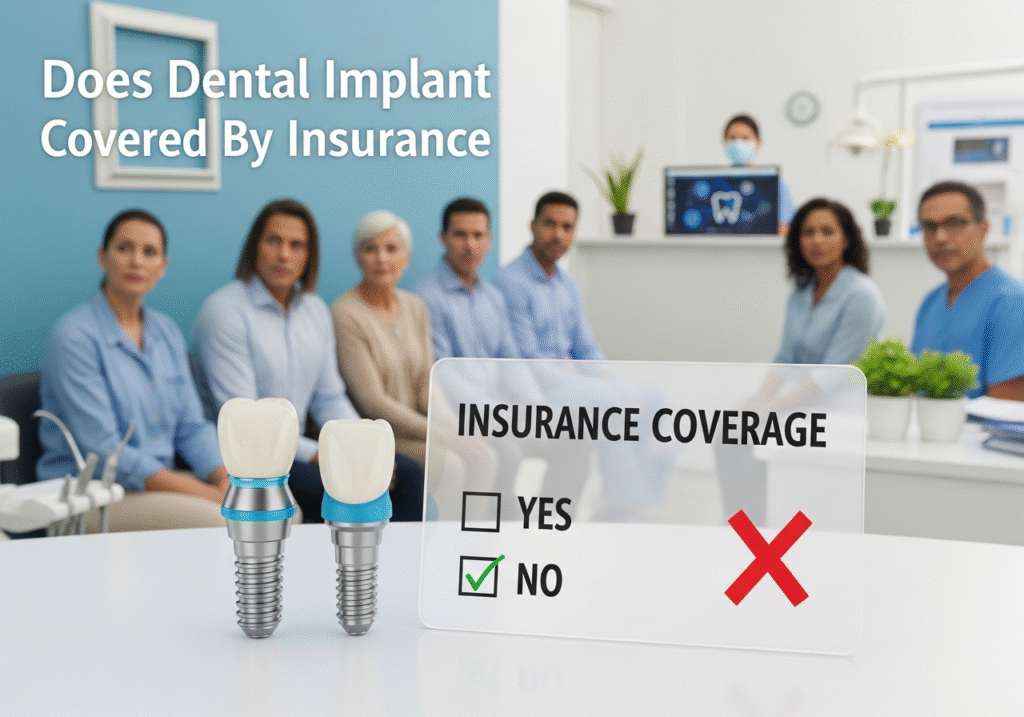
While dental implants are the gold standard for replacing missing teeth, their high price tag—often $3,000 to $6,000 per tooth—leaves many asking: Does dental implant covered by insurance? The answer is rarely a simple “yes” or “no.” Success in getting coverage depends on how your dentist codes the procedure and your specific plan’s view on cosmetic dentistry versus oral health necessity.
1. Understanding the Coverage Gap
Most insurance plans categorize dental implants under “Major Restorative Services.”
- Traditional Dental Insurance: Usually covers 25% to 50% of the cost, but is limited by an annual maximum (typically $1,500–$2,000).
- Medical Insurance: May cover the surgery if the tooth loss resulted from trauma, injury, or a congenital defect.
- The “LEAT” Clause: Be wary of the Least Expensive Alternative Treatment clause, where insurance only pays for a cheaper bridge or denture.
2. Regional Cost Breakdown (USA)
Location plays a major role in your out-of-pocket expenses.
| Region | Average Cost per Implant | Financial Notes |
| Northeast | $4,000 – $6,500 | Higher overheads; best for specialty clinics. |
| Midwest | $3,000 – $5,000 | Competitive pricing; moderate insurance acceptance. |
| South | $3,000 – $4,500 | Most affordable; high availability of payment plans. |
| West | $4,000 – $6,000 | Higher urban costs; specialized zirconia options common. |
3. The Secret to Long-Term Implant Success
Insurance rarely covers a “failed” implant. If your implant fails due to gum disease (peri-implantitis), you may have to pay for the entire replacement yourself.
Proactive Care: To protect your $5,000 investment, your oral microbiome must be balanced. ProvaDent is a high-performance oral probiotic that populates your mouth with beneficial bacteria. This helps keep the gums around your dental surgery site firm and infection-free, ensuring your implant lasts the promised 20+ years.
4. Tips to Maximize Your Benefits
- Split the Treatment: Since implants involve stages (placement, healing, crown), ask your dentist to bill the surgery in December and the crown in January. This lets you use two years of insurance maximums.
- Pre-Authorization: Never start surgery without a written “Pre-Determination” from your insurer.
- Use HSA/FSA: These funds are 100% tax-free and can be used for the portions insurance won’t touch, like sedation or premium zirconia materials.
5. Comparison: Implants vs. Alternatives
| Feature | Dental Implant | Dental Bridge | Partial Dentures |
| Longevity | 20–25+ Years | 10–15 Years | 5–10 Years |
| Bone Health | Prevents bone loss | No bone protection | Can accelerate bone loss |
| Cost | High Upfront | Moderate | Low |
| Insurance | Partial/Rare | Usually 50% | Usually 50% |
FAQ: Quick Hits
- Does Medicare cover implants? Standard Medicare does not; some Medicare Advantage plans might.
- Is the procedure painful? Most is done under local anesthesia or sedation; post-op discomfort is usually managed with OTC meds.
- How long is the process? Total time is usually 3–6 months to allow for “osseointegration” (bone bonding).
Pingback: How Much Would A Dental Bridge Cost