
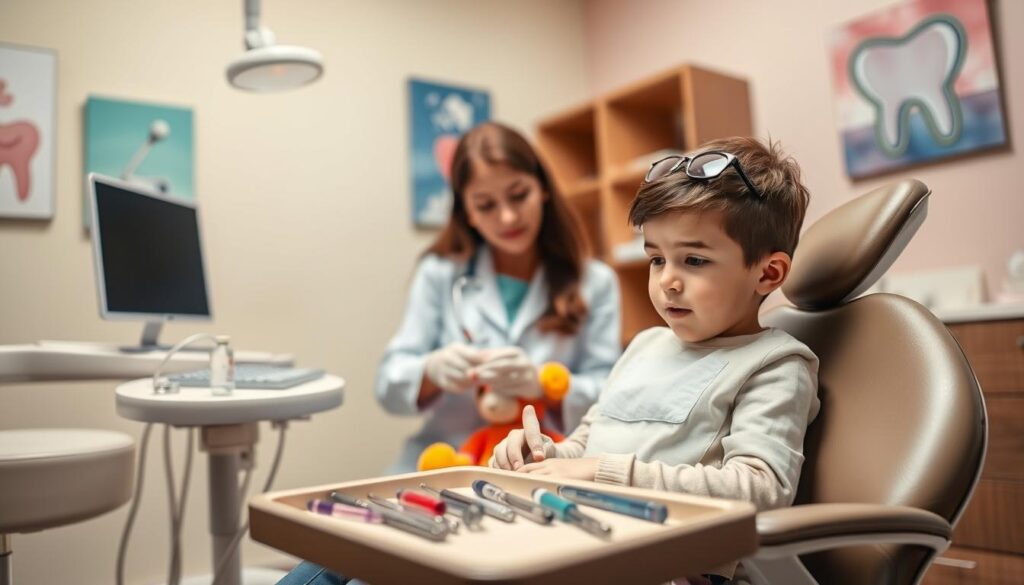
Seeing your child’s first loose tooth is a major milestone. It’s a sign they’re growing up, but as a parent, it can be nerve-wracking. Should you pull it? Should you wait?
In the US, pediatric dentists recommend a “Hands-Off” approach unless the tooth is literally hanging by a thread. Here is how to handle the situation safely at home.
Step 1: The Wiggle Test
The best way to know if a tooth is ready is the “Wiggle Test.”
- Tongue Wiggling: Encourage your child to move the tooth with their tongue.
- Finger Wiggling: If you use your fingers, wash them thoroughly first. If the tooth moves freely back and forth and side to side without pain, it is ready.
Step 2: Create a Sterile Environment
Don’t just use your bare hands.
- Gauze is Key: Use a small piece of sterile gauze to grip the tooth. This provides traction and keeps the area clean.
- Hand Washing: Ensure both you and your child have washed your hands with antibacterial soap.
Step 3: The Gentle Twist
If the tooth is ready, it shouldn’t require a hard “pull.”
- Apply a firm but gentle twist. The tooth should pop out easily.
- If it resists or causes sharp pain, STOP. This means the roots haven’t fully dissolved yet. Wait a few more days.
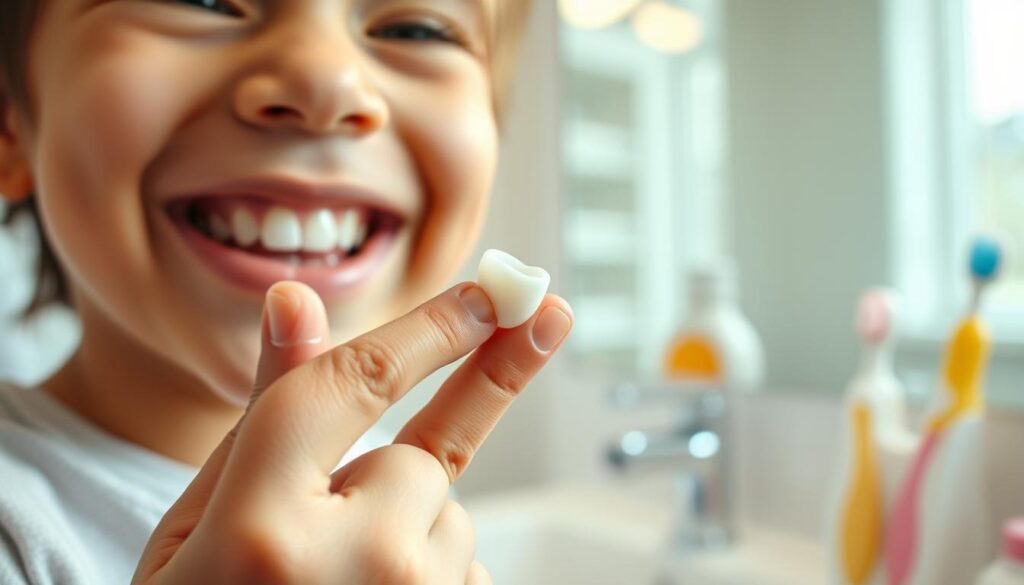
When to Call a Professional (The Red Flags)
In the USA, dental safety is a priority. Call your pediatric dentist if you notice:
- Extreme Pain: If the child screams or cries when the tooth is touched.
- Fragment Left Behind: If a piece of the baby tooth breaks off and stays in the gum.
- Abnormal Swelling: If the gums look bright red, purple, or very swollen.
Post-Extraction Care (The Fun Part!)
- Bite on Gauze: Have your child bite down on clean gauze for 15 minutes to stop any spotting.
- The Reward: In the US, the Tooth Fairy is the best distraction! Whether it’s a gold coin or a small toy, celebrate this milestone.
- Avoid Straws: Just like adult extractions, avoid straws for 24 hours to protect the tiny blood clot.
FAQs for Concerned Parents
Q: My child’s adult tooth is coming in behind the baby tooth (Shark Teeth). Should I pull the baby tooth? A: This is common. Usually, the baby tooth will fall out on its own, but if it doesn’t move at all, it’s time to see a dentist.
Q: How much bleeding is normal? A: A few drops of blood are normal. It should stop within 10-15 minutes of applying pressure.
Supporting Future Dental Health Once the tooth is out, it’s the perfect time to focus on the health of the incoming permanent tooth. Many parents in the US are now using oral probiotics like ProvaDent to maintain a healthy bacterial balance in their child’s mouth, ensuring that the new teeth grow into a clean, healthy environment.